Rent vs Buy Calculator — Surat (2026)
Home-buying economics for Surat, Gujarat, with Gujarat’s real stamp duty and registration costs. Buying to rent out? See the Surat investment calculator.
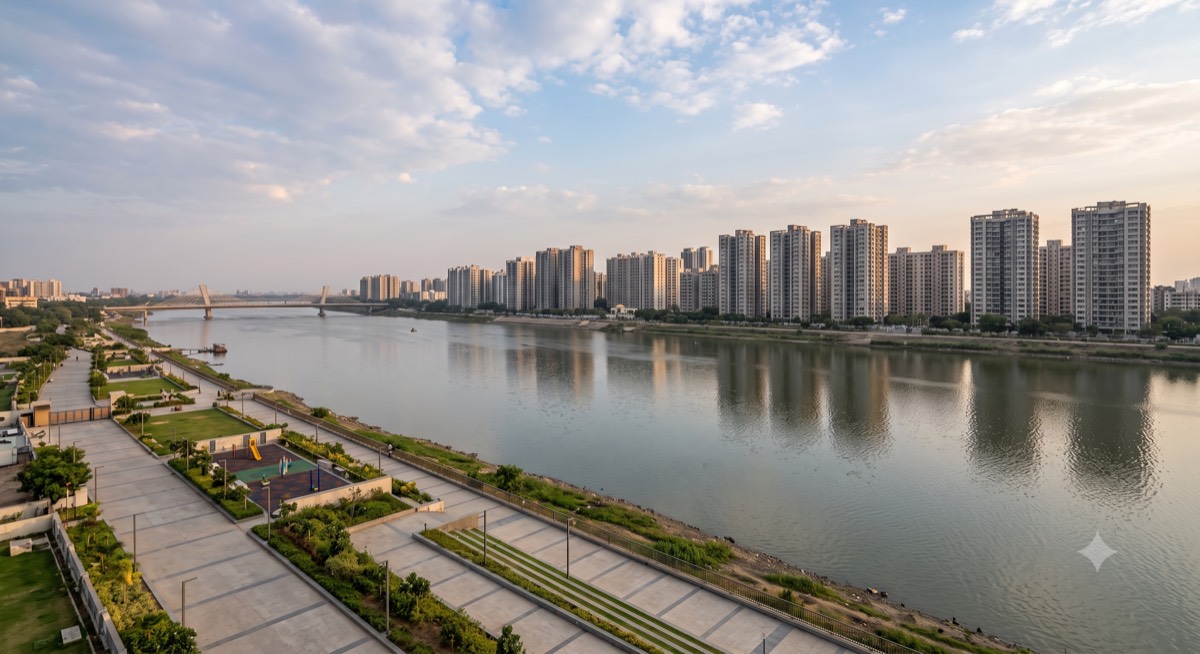
Where to buy in Surat? Best areas, prices & what to expect · ₹4K–₹7K/sq ftSee details
Surat — India's diamond and textile capital — is a fast-growing, business-driven market with citywide asking prices around ₹4,400/sq ft. The Vesu and Adajan belts are the premium residential zones, with Vesu crossing ₹5,600/sq ft, and strong end-user demand from a prosperous trading community has driven steady appreciation. As in the rest of Gujarat, low 5.9% combined statutory charges keep transaction costs modest.
Typical on-market price
₹4K–₹7K / sq ft
Notable localities
- Vesu — Premium south-side residential hub; ₹5,600/sq ft and up.
- Adajan — Established, well-connected riverside residential belt.
- Pal — Fast-growing western suburb adjacent to Adajan.
- Dumas Road — Upmarket corridor toward the coast with newer projects.
- Piplod — Central premium area near Vesu with strong demand.
Surat rent vs buy calculator
Key outputs
Buying this ₹70,00,000 home in Surat means an EMI of ₹42,523 paid from your pocket and ₹25,83,000 upfront. If you sell, selling turns net-positive around year 7. See the verdict below to compare with renting and investing that cash instead.
Share these numbers
The link carries every input above, so whoever opens it sees exactly this scenario — and can change it themselves.
Sponsored · we may earn a commission if you apply through this link.
30-year projection
Rent vs Buy — what leaves you richer?
If you don’t buy, you keep your ₹25,83,000 of upfront cash to invest and pay rent instead. Here’s the cash each path leaves you with — buying means selling the home minus the EMIs you paid; renting means your invested cash minus the rent you paid.
| After 10 yrs | After 20 yrs | After 30 yrs | |
|---|---|---|---|
| Buy → sell the home | |||
| Net sale proceeds | ₹93,10,825 | ₹2,50,62,536 | ₹4,93,01,801 |
| − Total EMI paid | −₹51,02,801 | −₹1,02,05,601 | −₹1,02,05,601 |
| = Final cash | ₹42,08,024 | ₹1,48,56,935 | ₹3,90,96,200 |
| Rent → invest the ₹25,83,000 + pay rent | |||
| Total rent paid | ₹27,16,825 | ₹71,42,246 | ₹1,43,50,791 |
| Stock market @ 10.0% → value | ₹66,99,637 | ₹1,73,77,132 | ₹4,50,71,806 |
| = Final cash (− rent) | ₹39,82,812 | ₹1,02,34,886 | ₹3,07,21,015 |
| Fixed deposit @ 7.0% → value | ₹50,81,152 | ₹99,95,395 | ₹1,96,62,455 |
| = Final cash (− rent) | ₹23,64,327 | ₹28,53,149 | ₹53,11,664 |
| P2P lending @ 12.0% → value | ₹80,22,406 | ₹2,49,16,375 | ₹7,73,86,479 |
| = Final cash (− rent) | ₹53,05,581 | ₹1,77,74,129 | ₹6,30,35,688 |
| Verdict | Renting + P2P wins | Renting + P2P wins | Renting + P2P wins |
Buy “final cash” is the sale proceeds minus every EMI you paid; rent “final cash” is the invested cash minus every rent payment — so both count their housing cost. The property’s net gain (final cash − upfront) matches “Net gain if sold” in the projection below.
Illustrative only, not financial advice. Investment rows assume the upfront cash is a one-time lump sum compounding at the rate you enter. Returns are assumptions and are not guaranteed.
Full year-by-year projection
| Year | Property value | Annual EMI | Outstanding loan | Home equity | Cumulative EMI paid | Net gain if sold |
|---|---|---|---|---|---|---|
| 1 | ₹70,00,000 | ₹5,10,276 | ₹48,02,479 | ₹5,10,280 | ||
| 2 | ₹74,90,000 | ₹5,10,276 | ₹46,96,338 | ₹10,20,560 | ||
| 3 | ₹80,14,300 | ₹5,10,276 | ₹45,80,814 | ₹15,30,840 | ||
| 4 | ₹85,75,301 | ₹5,10,276 | ₹44,55,080 | ₹20,41,120 | ||
| 5 | ₹91,75,572 | ₹5,10,276 | ₹43,18,232 | ₹25,51,400 | ||
| 6 | ₹98,17,862 | ₹5,10,276 | ₹41,69,288 | ₹30,61,680 | ||
| 7 | ₹1,05,05,112 | ₹5,10,276 | ₹40,07,178 | ₹35,71,960 | ||
| 8 | ₹1,12,40,470 | ₹5,10,276 | ₹38,30,740 | ₹40,82,240 | ||
| 9 | ₹1,20,27,303 | ₹5,10,276 | ₹36,38,706 | ₹45,92,521 | ||
| 10 | ₹1,28,69,214 | ₹5,10,276 | ₹34,29,697 | ₹51,02,801 | ||
| 11 | ₹1,37,70,060 | ₹5,10,276 | ₹32,02,215 | ₹56,13,081 | ||
| 12 | ₹1,47,33,964 | ₹5,10,276 | ₹29,54,625 | ₹61,23,361 | ||
| 13 | ₹1,57,65,341 | ₹5,10,276 | ₹26,85,150 | ₹66,33,641 | ||
| 14 | ₹1,68,68,915 | ₹5,10,276 | ₹23,91,856 | ₹71,43,921 | ||
| 15 | ₹1,80,49,739 | ₹5,10,276 | ₹20,72,638 | ₹76,54,201 | ||
| 16 | ₹1,93,13,221 | ₹5,10,276 | ₹17,25,203 | ₹81,64,481 | ||
| 17 | ₹2,06,65,146 | ₹5,10,276 | ₹13,47,059 | ₹86,74,761 | ||
| 18 | ₹2,21,11,706 | ₹5,10,276 | ₹9,35,490 | ₹91,85,041 | ||
| 19 | ₹2,36,59,526 | ₹5,10,276 | ₹4,87,542 | ₹96,95,321 | ||
| 20 | ₹2,53,15,693 | ₹5,10,276 | ₹0 | ₹1,02,05,601 | ||
| 21 | ₹2,70,87,791 | ₹0 | ₹0 | ₹1,02,05,601 | ||
| 22 | ₹2,89,83,937 | ₹0 | ₹0 | ₹1,02,05,601 | ||
| 23 | ₹3,10,12,812 | ₹0 | ₹0 | ₹1,02,05,601 | ||
| 24 | ₹3,31,83,709 | ₹0 | ₹0 | ₹1,02,05,601 | ||
| 25 | ₹3,55,06,569 | ₹0 | ₹0 | ₹1,02,05,601 | ||
| 26 | ₹3,79,92,028 | ₹0 | ₹0 | ₹1,02,05,601 | ||
| 27 | ₹4,06,51,470 | ₹0 | ₹0 | ₹1,02,05,601 | ||
| 28 | ₹4,34,97,073 | ₹0 | ₹0 | ₹1,02,05,601 | ||
| 29 | ₹4,65,41,869 | ₹0 | ₹0 | ₹1,02,05,601 | ||
| 30 | ₹4,97,99,799 | ₹0 | ₹0 | ₹1,02,05,601 |
Surat home-buying FAQs
What is the stamp duty rate in Surat?
Stamp duty in Surat (Gujarat) is 4.9% of the property value, the same regardless of the buyer’s gender. On the example price of ₹70,00,000 that works out to ₹3,43,000.
What is the property registration charge in Gujarat?
Registration charge in Gujarat is 1.0% of the property value with no upper cap. On the example price of ₹70,00,000 that is ₹70,000.
When does buying break even if you sell in Surat?
Buying a ₹70,00,000 home in Surat (30% down at 8.5% over 20 years) turns net-positive on sale around year 7 — that is when the sale proceeds finally cover your upfront cash and the EMIs paid. By year 10 the modelled net gain is about ₹16,25,024.
How much upfront cash do I need to buy a ₹70.00 L home in Surat?
To buy a ₹70,00,000 home in Surat you need roughly ₹25,83,000 upfront: a 30% down payment of ₹21,00,000 plus ₹4,83,000 of transaction costs (stamp duty ₹3,43,000, registration ₹70,000, brokerage ₹70,000).
Do women get a stamp duty concession in Gujarat?
No. Gujarat offers no reduced stamp duty for women buyers — the 4.9% slab applies regardless of who the property is registered to.
Which are the best areas to buy a home in Surat?
Vesu is the established premium residential hub (₹5,600/sq ft and above), with Piplod and Dumas Road offering upmarket alternatives nearby. Across the river, Adajan and the fast-growing Pal belt provide well-connected options at more moderate prices.
What are the stamp duty charges in Surat?
Surat follows Gujarat’s statewide rates: roughly 4.9% stamp duty plus 1% registration, about 5.9% combined, on the higher of the transaction value or the government jantri rate. That keeps Surat among the cheaper Indian cities in which to complete a purchase.
Surat at a glance
Based on an example ₹70,00,000 home at 30% down, 8.5% over 20 years. Change any input in the calculator to see your own numbers.
| Example property price | ₹70,00,000 |
|---|---|
| Down payment (30%) | ₹21,00,000 |
| Loan amount | ₹49,00,000 |
| Monthly EMI | ₹42,523 |
| Stamp duty (4.9%) | ₹3,43,000 |
| Registration | ₹70,000 |
| Brokerage | ₹70,000 |
| All-in transaction cost (6.9%) | ₹4,83,000 |
| Upfront cash needed | ₹25,83,000 |
| Rent if you rented instead | ₹18,000 / mo |
| Net gain if sold (10 yr) | ₹16,25,024 |
| Break-even on sale | Year 7 |