Property Investment Calculator — Gurgaon (2026)
Rental yield, cash flow, and return on cash for a buy-to-let in Gurgaon, Haryana. Planning to live in it instead? Use the Gurgaon rent vs buy calculator.
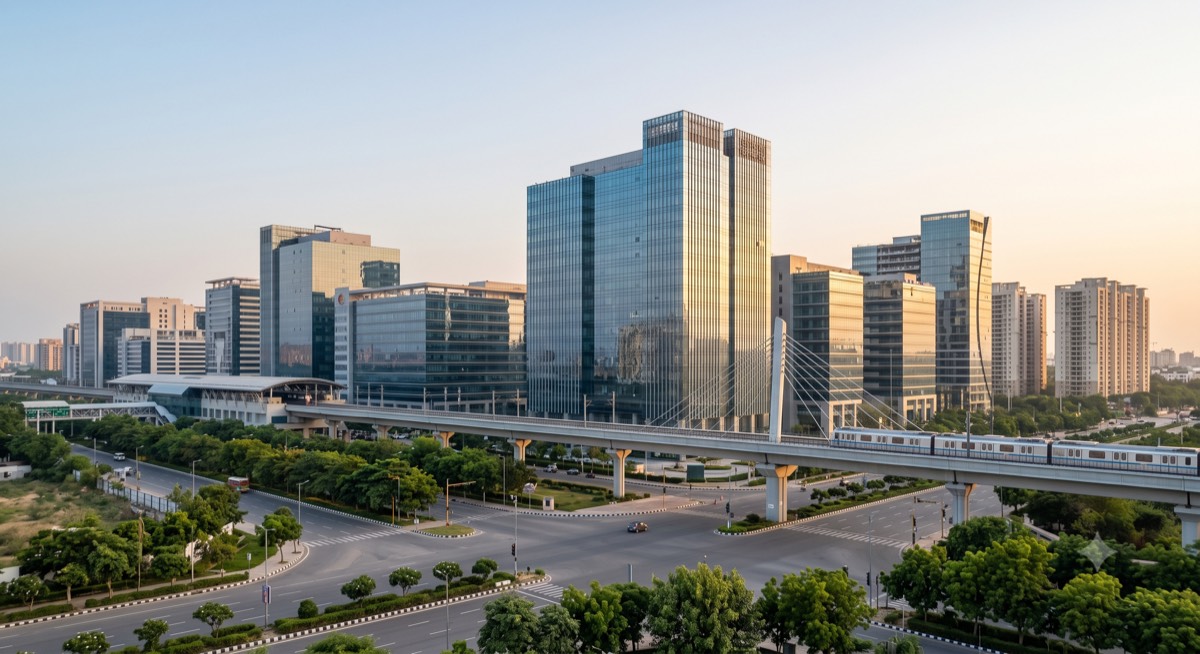
Where to buy in Gurgaon? Best areas, prices & what to expect · ₹5K–₹25K/sq ftSee details
Gurgaon (Gurugram) is the NCR's corporate and luxury-housing capital, and its market is sharply tiered. Prime Golf Course Road commands around ₹25,000/sq ft, while the newer Dwarka Expressway and Southern Peripheral Road corridors offer ₹11,000–24,000/sq ft with the strongest recent appreciation. Demand is driven by senior corporate professionals and investors, and premium and new-corridor prices have risen 15–30% in the last cycle.
Typical on-market price
₹5K–₹25K / sq ft
Notable localities
- Golf Course Road — The prime luxury address; ~₹25,000/sq ft with ~3% yield.
- Dwarka Expressway — Fast-appreciating new corridor; flats ~₹11,000–16,750/sq ft.
- Sohna Road — Established mid-to-premium belt; ~₹12,450–20,000/sq ft.
- Golf Course Ext. Road (SPR) — Southern Peripheral Road growth corridor with new premium launches.
- New Gurgaon — More affordable west-side sectors from ~₹5,000/sq ft.
Gurgaon property investment calculator
Key outputs
On a ₹1,50,00,000 property in Gurgaon, the gross rental yield is 3.6% and monthly cash flow is -₹46,121 (you top this up each month). You need ₹58,50,000 upfront, and it turns net-positive on sale around year 4.
Share these numbers
The link carries every input above, so whoever opens it sees exactly this scenario — and can change it themselves.
Sponsored · we may earn a commission if you apply through this link.
30-year projection
What if you invested the upfront cash instead?
Your ₹58,50,000 of upfront cash doesn’t have to go into property. Here’s what it could grow to elsewhere, versus the effective return this property earns on that same cash.
| Where the upfront cash goes | Net gain, 10 yrs | Return / yr | Tax on the gain |
|---|---|---|---|
| This property (real estate) | ₹99,59,257 | XIRR | 12.5% LTCG — often nil if reinvested |
| Stock market @ 10.0% | ₹93,23,393 | 10.0%CAGR | 12.5% above ₹1.25L a year |
| Fixed deposit @ 7.0% | ₹56,57,835 | 7.0%CAGR | Your slab rate, taxed yearly |
| P2P lending @ 12.0% | ₹1,23,19,212 | 12.0%CAGR | Your slab rate, taxed yearly |
Why the property uses XIRR. CAGR compares two numbers — money in at the start, money out at the end — which is right for a lump sum you never touch. Buying a home isn’t that: you pay EMI every month for years and collect rent alongside it. XIRR is the one annual rate at which all of those dated amounts discount back to zero, so it prices when each rupee moved and stays comparable with the CAGR figures above. Hover the 8.7% to see all 10 years of cash flow.
The property’s net gain is the same “Net gain if sold” figure as year 10 in the projection table below, and it is the undiscounted total of those same cash flows — so all three reconcile.
On tax. Every figure here is pre-tax. Sell after 24 months and the gain is long-term, taxed at 12.5% without indexation (a property bought today gets only this rate; the 20%-with-indexation option survives solely for purchases made before 23 July 2024). Sell sooner and the whole gain is added to your income at slab rates. Section 54 can reduce the tax to nil if you reinvest the gain in another residential house — but the window is 1 year before to 2 years after the sale (3 years to construct), not the same financial year, and anything not yet reinvested by your return-filing date must sit in a Capital Gains Account Scheme deposit meanwhile. The exemption covers the gain rather than the whole sale price, and is capped at ₹10 crore. Rent is treated separately: Rent is taxed as Income from House Property: take the annual rent, subtract a flat 30% standard deduction under Section 24(a) — no receipts needed — and subtract the home-loan interest under Section 24(b), which is uncapped on a let-out property. What remains is added to your income and taxed at your slab. A resulting loss offsets other income only up to ₹2 lakh a year, with the balance carried forward eight years. By contrast, listed equity and equity mutual funds held over 12 months are taxed at 12.5% under Section 112A, with the first ₹1.25 lakh of aggregate long-term gains each year exempt. Sold sooner, gains are short-term and taxed at 20% under Section 111A. This is the lightest treatment of the four options. Interest from fixed deposits and P2P lending is added to your income and taxed at your slab rate, which is what makes their headline rates flatter them most. This is general information for FY 2025-26, not tax advice — confirm your own position with a chartered accountant.
Illustrative only, not financial advice. Investment rows assume the upfront cash is a one-time lump sum compounding at the rate you enter. Returns are assumptions and are not guaranteed.
Full year-by-year projection
| Year | Property value | Annual rent | Annual EMI | Outstanding loan | Home equity | Net (rent − EMI) | Cumulative net cash | Net gain if sold |
|---|---|---|---|---|---|---|---|---|
| 1 | ₹1,50,00,000 | ₹5,40,000 | ₹10,93,452 | ₹1,02,91,026 | -₹5,53,457 | -₹5,53,457 | ||
| 2 | ₹1,60,50,000 | ₹5,67,000 | ₹10,93,452 | ₹1,00,63,580 | -₹5,26,457 | -₹10,79,915 | ||
| 3 | ₹1,71,73,500 | ₹5,95,350 | ₹10,93,452 | ₹98,16,031 | -₹4,98,107 | -₹15,78,022 | ||
| 4 | ₹1,83,75,645 | ₹6,25,118 | ₹10,93,452 | ₹95,46,600 | -₹4,68,340 | -₹20,46,362 | ||
| 5 | ₹1,96,61,940 | ₹6,56,373 | ₹10,93,452 | ₹92,53,354 | -₹4,37,084 | -₹24,83,445 | ||
| 6 | ₹2,10,38,276 | ₹6,89,192 | ₹10,93,452 | ₹89,34,188 | -₹4,04,265 | -₹28,87,711 | ||
| 7 | ₹2,25,10,955 | ₹7,23,652 | ₹10,93,452 | ₹85,86,810 | -₹3,69,806 | -₹32,57,516 | ||
| 8 | ₹2,40,86,722 | ₹7,59,834 | ₹10,93,452 | ₹82,08,728 | -₹3,33,623 | -₹35,91,139 | ||
| 9 | ₹2,57,72,793 | ₹7,97,826 | ₹10,93,452 | ₹77,97,226 | -₹2,95,631 | -₹38,86,771 | ||
| 10 | ₹2,75,76,888 | ₹8,37,717 | ₹10,93,452 | ₹73,49,351 | -₹2,55,740 | -₹41,42,511 | ||
| 11 | ₹2,95,07,270 | ₹8,79,603 | ₹10,93,452 | ₹68,61,889 | -₹2,13,854 | -₹43,56,365 | ||
| 12 | ₹3,15,72,779 | ₹9,23,583 | ₹10,93,452 | ₹63,31,339 | -₹1,69,874 | -₹45,26,239 | ||
| 13 | ₹3,37,82,874 | ₹9,69,762 | ₹10,93,452 | ₹57,53,893 | -₹1,23,695 | -₹46,49,934 | ||
| 14 | ₹3,61,47,675 | ₹10,18,251 | ₹10,93,452 | ₹51,25,406 | -₹75,207 | -₹47,25,141 | ||
| 15 | ₹3,86,78,012 | ₹10,69,163 | ₹10,93,452 | ₹44,41,367 | -₹24,294 | -₹47,49,435 | ||
| 16 | ₹4,13,85,473 | ₹11,22,621 | ₹10,93,452 | ₹36,96,865 | ₹29,164 | -₹47,20,271 | ||
| 17 | ₹4,42,82,456 | ₹11,78,752 | ₹10,93,452 | ₹28,86,555 | ₹85,295 | -₹46,34,976 | ||
| 18 | ₹4,73,82,228 | ₹12,37,690 | ₹10,93,452 | ₹20,04,622 | ₹1,44,233 | -₹44,90,743 | ||
| 19 | ₹5,06,98,984 | ₹12,99,574 | ₹10,93,452 | ₹10,44,734 | ₹2,06,117 | -₹42,84,626 | ||
| 20 | ₹5,42,47,913 | ₹13,64,553 | ₹10,93,452 | ₹0 | ₹2,71,096 | -₹40,13,530 | ||
| 21 | ₹5,80,45,267 | ₹14,32,781 | ₹0 | ₹0 | ₹14,32,781 | -₹25,80,750 | ||
| 22 | ₹6,21,08,436 | ₹15,04,420 | ₹0 | ₹0 | ₹15,04,420 | -₹10,76,330 | ||
| 23 | ₹6,64,56,026 | ₹15,79,641 | ₹0 | ₹0 | ₹15,79,641 | ₹5,03,311 | ||
| 24 | ₹7,11,07,948 | ₹16,58,623 | ₹0 | ₹0 | ₹16,58,623 | ₹21,61,934 | ||
| 25 | ₹7,60,85,504 | ₹17,41,554 | ₹0 | ₹0 | ₹17,41,554 | ₹39,03,488 | ||
| 26 | ₹8,14,11,490 | ₹18,28,632 | ₹0 | ₹0 | ₹18,28,632 | ₹57,32,120 | ||
| 27 | ₹8,71,10,294 | ₹19,20,063 | ₹0 | ₹0 | ₹19,20,063 | ₹76,52,183 | ||
| 28 | ₹9,32,08,014 | ₹20,16,066 | ₹0 | ₹0 | ₹20,16,066 | ₹96,68,249 | ||
| 29 | ₹9,97,32,575 | ₹21,16,870 | ₹0 | ₹0 | ₹21,16,870 | ₹1,17,85,119 | ||
| 30 | ₹10,67,13,856 | ₹22,22,713 | ₹0 | ₹0 | ₹22,22,713 | ₹1,40,07,832 |
Gurgaon property investment FAQs
What is the rental yield in Gurgaon?
At a rent of ₹45,000/month on a ₹1,50,00,000 property, the gross rental yield in Gurgaon is about 3.6% per year (before maintenance, tax, and vacancy). That is the annual rent as a share of the purchase price.
Is a buy-to-let property cash-flow positive in Gurgaon?
Not initially. At ₹45,000 rent against a ₹91,121 EMI (30% down at 8.5% over 20 years), you top up about ₹46,121 a month; rent growth narrows this gap over time.
What return could a Gurgaon property give if sold in 10 years?
Selling after 10 years (default 7% property growth, 5% rent growth, 1.0% resale cost), the modelled net gain is ₹99,59,257 on ₹58,50,000 of upfront cash — a return on cash of about 170%. These are assumptions you can change.
How much upfront cash do I need to invest in a ₹1.50 Cr property in Gurgaon?
To invest in a ₹1,50,00,000 property in Gurgaon you need roughly ₹58,50,000 upfront: a 30% down payment of ₹45,00,000 plus ₹13,50,000 of stamp duty, registration, and brokerage.
When does a Gurgaon property investment break even?
Under the default assumptions, a Gurgaon purchase turns net-positive on sale around year 4 — before that, appreciation has not yet covered your transaction and holding costs.
Do women pay lower stamp duty in Gurgaon?
Yes. In Haryana’s urban areas (which include Gurugram) women buyers pay 5% stamp duty against 7% for men and 6% for joint ownership, plus a 1% registration charge. On a ₹1.5 crore home the sole-female rate saves ₹3 lakh versus a male buyer.
Is Golf Course Road or Dwarka Expressway better to buy in?
Golf Course Road is the established prime market — highest prices (~₹25,000/sq ft), mature infrastructure, and strong rental demand from senior executives. Dwarka Expressway is newer, cheaper per sq ft, and has shown faster appreciation as connectivity completes. Golf Course Road suits buyers wanting a proven premium address; Dwarka Expressway suits those prioritising growth potential.
Gurgaon at a glance
Based on an example ₹1,50,00,000 home at 30% down, 8.5% over 20 years. Change any input in the calculator to see your own numbers.
| Example property price | ₹1,50,00,000 |
|---|---|
| Upfront cash needed | ₹58,50,000 |
| Monthly EMI | ₹91,121 |
| Typical monthly rent | ₹45,000 |
| Gross rental yield | 3.6% / year |
| Monthly cash flow (rent − EMI) | −₹46,121 |
| Net gain if sold in year 10 | ₹99,59,257 |
| Return on cash (year 10) | 170% |
| Break-even on sale | Year 4 |